Skip to content
  • facebook.com
  • twitter.com
  • t.me
  • instagram.com
  • youtube.com
Electronics Engineering

Powering Innovation. Engineering the Connected World.

Subscribe
  • Home
  • Online Tools
  • Electronics Engineering App
  • Home
  • 2026
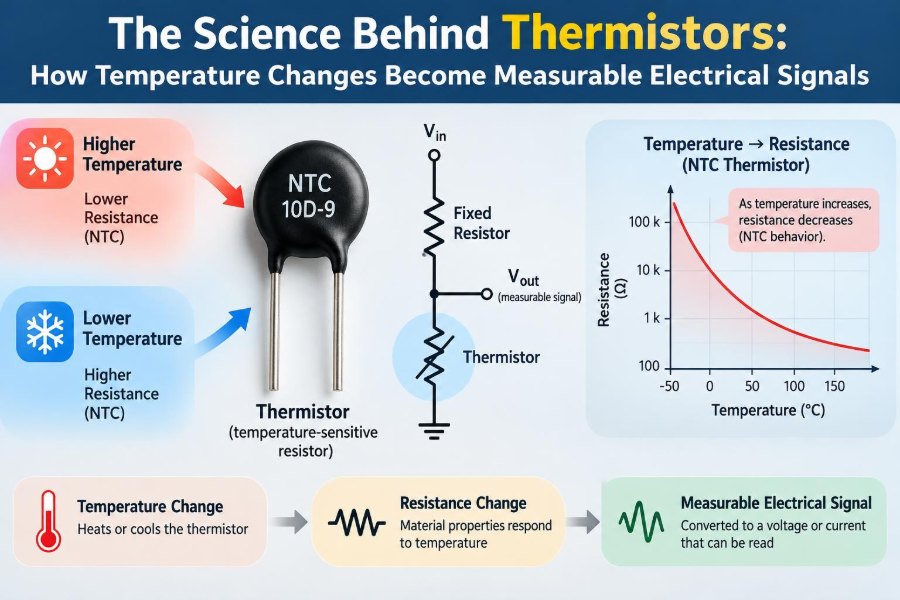
πŸ”Œ The Science Behind Thermistors: How Temperature Changes Become Measurable Electrical Signals
Posted inFeatured

πŸ”Œ The Science Behind Thermistors: How Temperature Changes Become Measurable Electrical Signals

Posted by admin November 27, 2026
Learn why NTC and PTC thermistors behave differently, how voltage-divider circuits read them, and which real-world design errors can distort temperature data. 🧠⚑🌑️
Read More
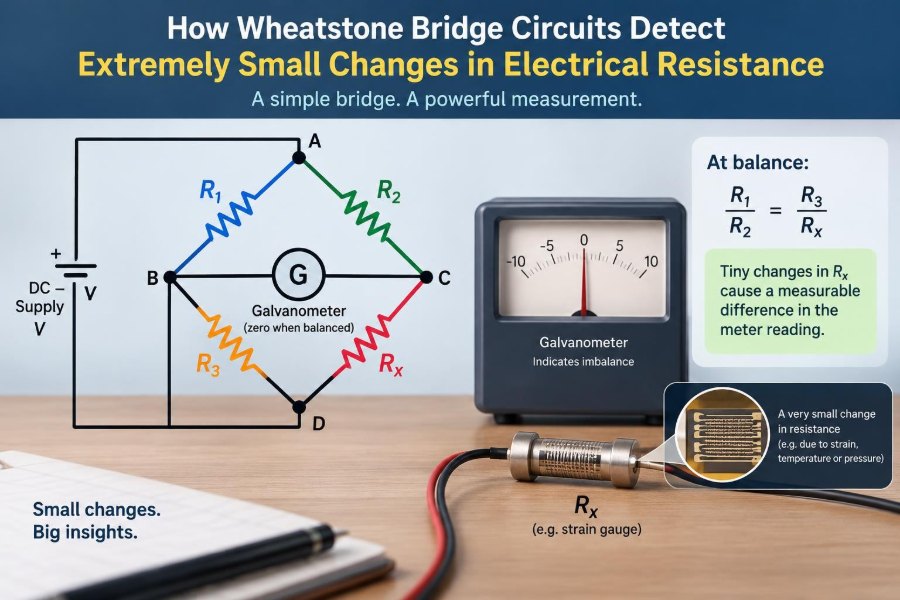
πŸ”Œ How Wheatstone Bridge Circuits Detect Extremely Small Changes in Electrical Resistance
Posted inFeatured

πŸ”Œ How Wheatstone Bridge Circuits Detect Extremely Small Changes in Electrical Resistance

Posted by admin November 27, 2026
See how four resistors turn minute sensor changes into measurable voltageβ€”and learn what wiring, noise, excitation, and calibration can do to accuracy. πŸ“πŸ”§βš‘
Read More
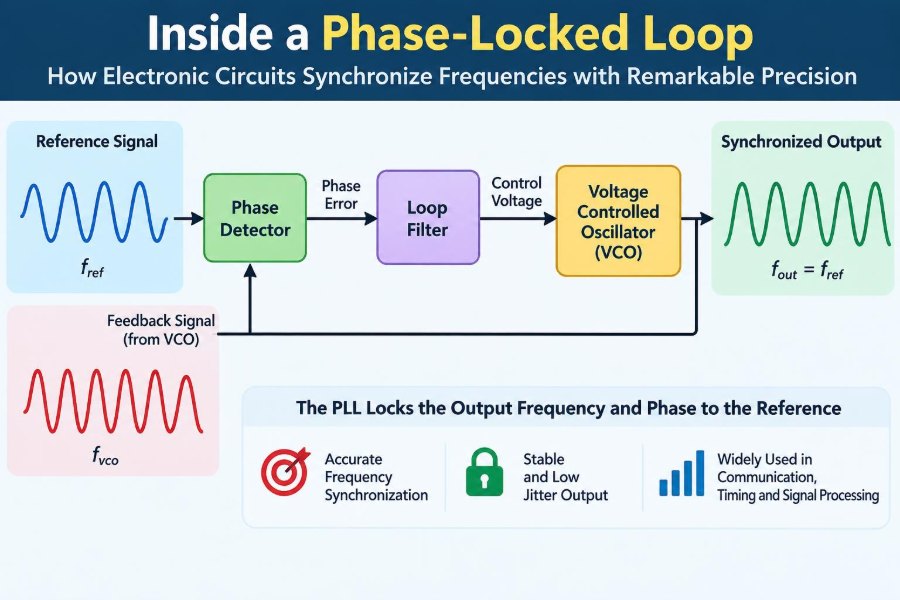
πŸ”Œ Inside a Phase-Locked Loop: How Electronic Circuits Synchronize Frequencies with Remarkable Precision
Posted inFeatured

πŸ”Œ Inside a Phase-Locked Loop: How Electronic Circuits Synchronize Frequencies with Remarkable Precision

Posted by admin November 26, 2026
See how phase detectors, loop filters, and VCOs turn tiny timing errors into stable clocks and radio frequenciesβ€”and learn where jitter and spurs come from. πŸ“‘πŸ§ πŸ”§
Read More
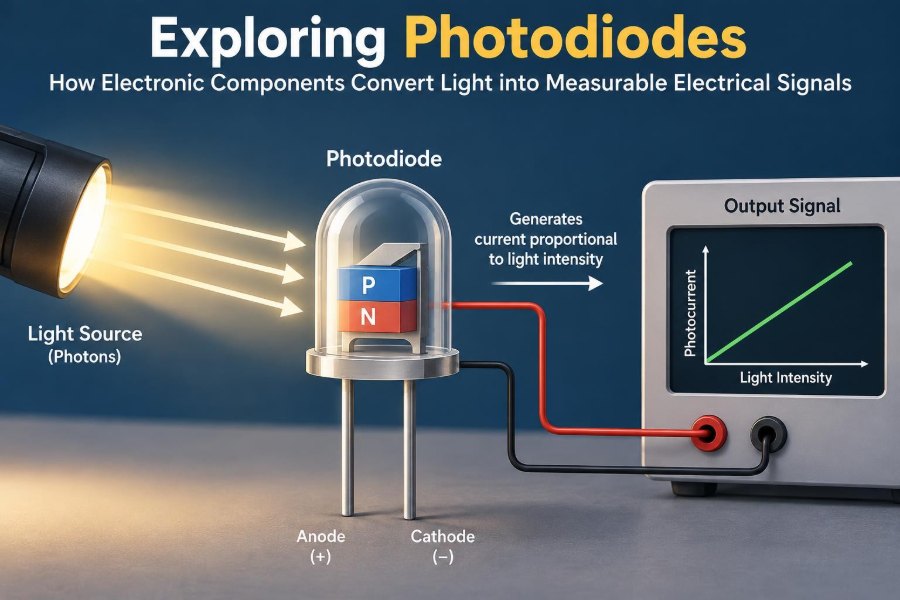
πŸ”Œ Exploring Photodiodes: How Electronic Components Convert Light into Measurable Electrical Signals
Posted inFeatured

πŸ”Œ Exploring Photodiodes: How Electronic Components Convert Light into Measurable Electrical Signals

Posted by admin November 26, 2026
From remote controls to fiber links, photodiodes make light measurable. Learn the physics, TIA circuits, noise limits, and design trade-offs behind reliable optical sensing. πŸ”ŒπŸ“ˆπŸ”¦
Read More
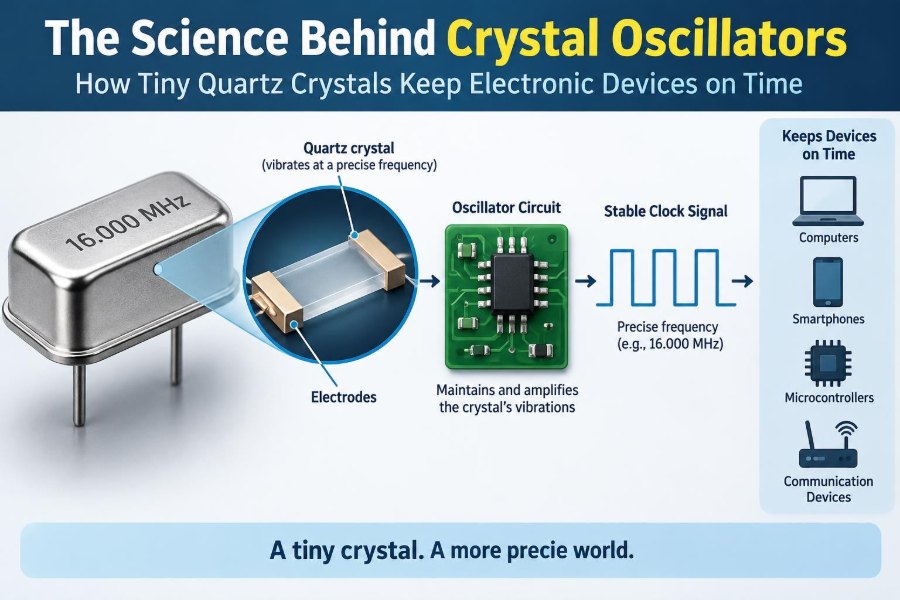
πŸ”Œ The Science Behind Crystal Oscillators: How Tiny Quartz Crystals Keep Electronic Devices on Time
Posted inFeatured

πŸ”Œ The Science Behind Crystal Oscillators: How Tiny Quartz Crystals Keep Electronic Devices on Time

Posted by admin November 25, 2026
From phone alarms to microcontroller clocks, quartz resonance keeps circuits synchronized. Learn what crystals do, why layout matters, and how to avoid timing failures. πŸ”ŒπŸ§©βš‘
Read More
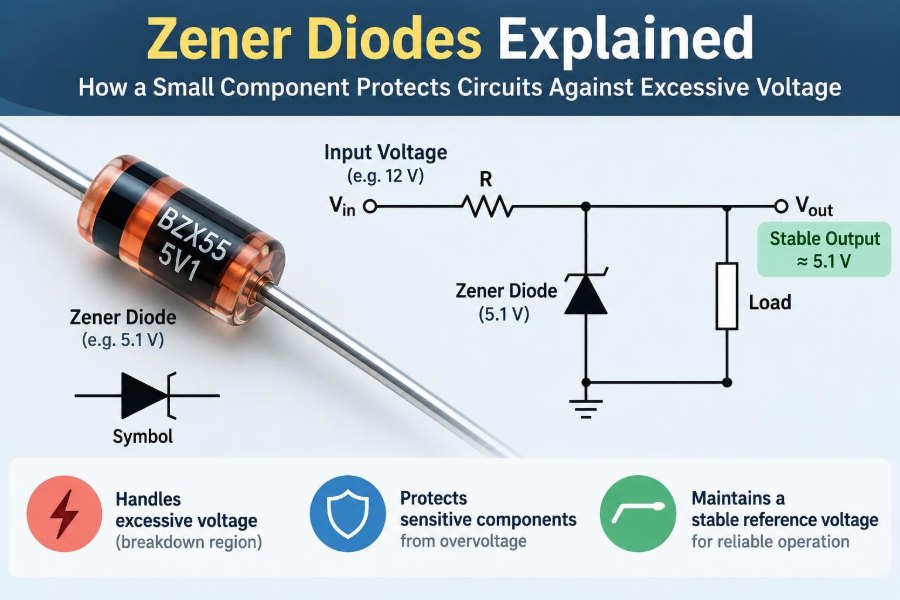
πŸ”Œ Zener Diodes Explained: How a Small Component Protects Circuits Against Excessive Voltage
Posted inFeatured

πŸ”Œ Zener Diodes Explained: How a Small Component Protects Circuits Against Excessive Voltage

Posted by admin November 25, 2026
See how Zener diodes clamp excessive voltage, why a series resistor is essential, and when a TVS diode is the safer choice for real surges. βš‘πŸ”§πŸ“˜
Read More
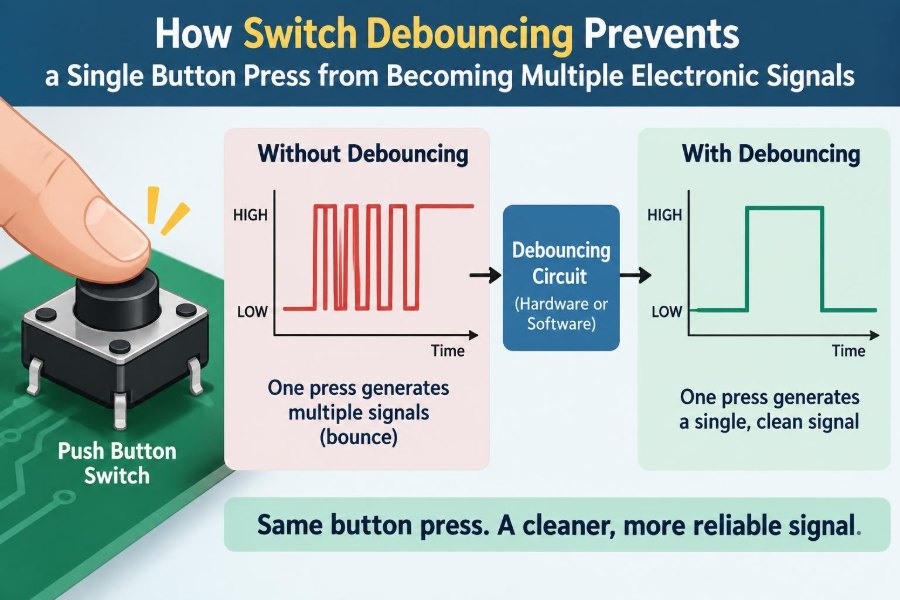
πŸ”Œ How Switch Debouncing Prevents a Single Button Press from Becoming Multiple Electronic Signals
Posted inFeatured

πŸ”Œ How Switch Debouncing Prevents a Single Button Press from Becoming Multiple Electronic Signals

Posted by admin November 24, 2026
Mechanical contacts bounce before settling, and fast electronics can count every bounce. Learn practical hardware and firmware fixes for reliable inputs. πŸ”ŒπŸ§ πŸ› οΈ
Read More
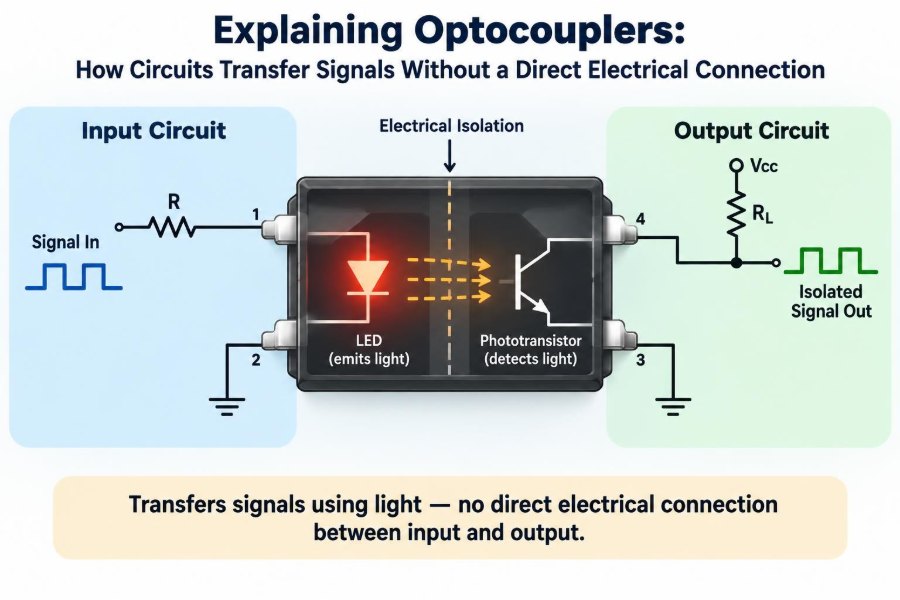
πŸ”Œ Explaining Optocouplers: How Circuits Transfer Signals Without a Direct Electrical Connection
Posted inFeatured

πŸ”Œ Explaining Optocouplers: How Circuits Transfer Signals Without a Direct Electrical Connection

Posted by admin November 24, 2026
See how optocouplers pass control signals without a shared electrical pathβ€”and learn the ratings, CTR limits, layout rules, and mistakes that matter. πŸ›‘οΈβš™οΈπŸ”¬
Read More
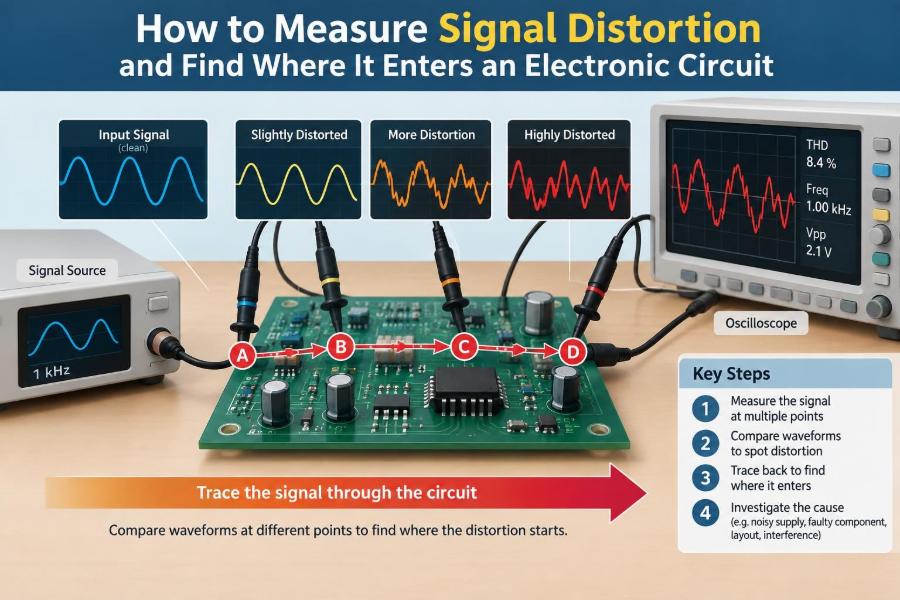
πŸ”Œ How to Measure Signal Distortion and Find Where It Enters an Electronic Circuit
Posted inFeatured

πŸ”Œ How to Measure Signal Distortion and Find Where It Enters an Electronic Circuit

Posted by admin November 23, 2026
A bad waveform is a clue, not a diagnosis. Learn how to probe safely, compare signal stages, spot noise and clipping, and isolate the first bad node. πŸ§ͺβš‘πŸ› οΈ
Read More
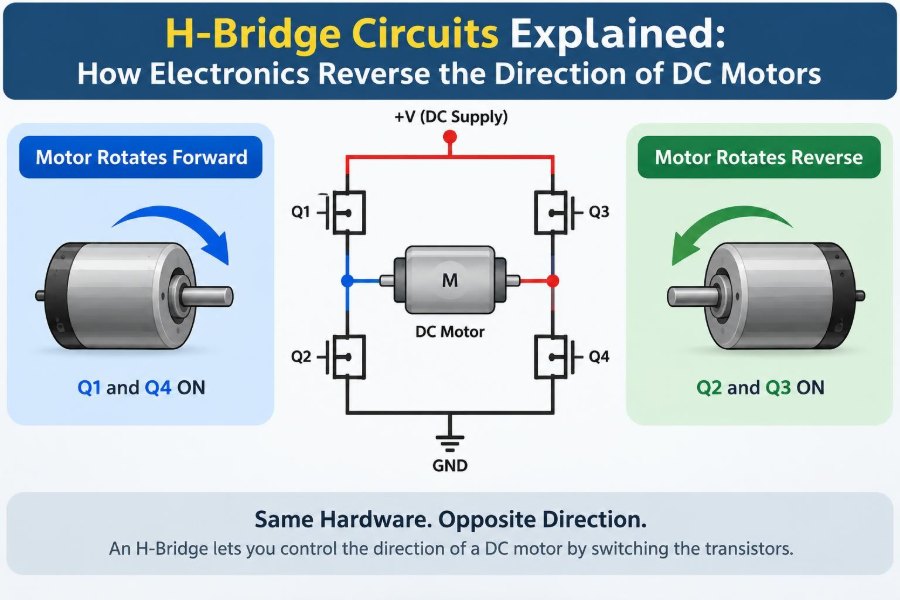
πŸ”Œ H-Bridge Circuits Explained: How Electronics Reverse the Direction of DC Motors
Posted inFeatured

πŸ”Œ H-Bridge Circuits Explained: How Electronics Reverse the Direction of DC Motors

Posted by admin November 23, 2026
See how four switches reverse motor current, control speed with PWM, and avoid shoot-through, overheating, and inductive voltage spikes. Build safer motor projects βš™οΈπŸ› οΈ
Read More

Posts pagination

1 2 3 … 13 Next page

Recent Posts

  • πŸ”Œ The Science Behind Thermistors: How Temperature Changes Become Measurable Electrical Signals
  • πŸ”Œ How Wheatstone Bridge Circuits Detect Extremely Small Changes in Electrical Resistance
  • πŸ”Œ Inside a Phase-Locked Loop: How Electronic Circuits Synchronize Frequencies with Remarkable Precision
  • πŸ”Œ Exploring Photodiodes: How Electronic Components Convert Light into Measurable Electrical Signals
  • πŸ”Œ The Science Behind Crystal Oscillators: How Tiny Quartz Crystals Keep Electronic Devices on Time

Recent Comments

No comments to show.

Archives

  • November 2026
  • October 2026
  • September 2026
  • August 2026
  • March 2025
  • February 2025
  • January 2025
  • February 2022
  • November 2021
  • October 2021
  • September 2021
  • August 2021

Categories

  • basic
  • Circuit theory
  • consumer appliances
  • Control systems
  • Digtal time system and signal processing
  • DIY Project
  • Electric energy generation and utilization
  • electrical projects
  • electronic devices
  • Featured
  • Microprocessor and Microcontroller
  • multimedia processing
  • Numerical method
  • Power engineering
  • power transmission
  • Protection and Switch gear
  • Signal processing
  • Solid State drives
  • Systems and controls
  • Telecommunication
  • Wireless Technology
Copyright 2026 — Electronics Engineering. All rights reserved. Bloghash WordPress Theme
Scroll to Top