Skip to content
  • facebook.com
  • twitter.com
  • t.me
  • instagram.com
  • youtube.com
Electronics Engineering

Powering Innovation. Engineering the Connected World.

Subscribe
  • Home
  • Online Tools
  • Electronics Engineering App
  • Home
  • PWM
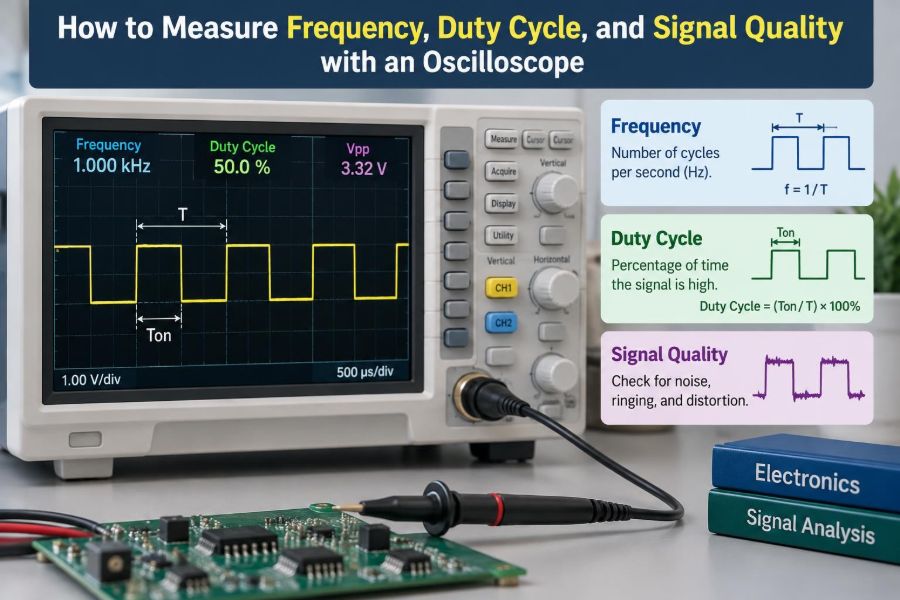
πŸ”Œ How to Measure Frequency, Duty Cycle, and Signal Quality with an Oscilloscope
Posted inFeatured

πŸ”Œ How to Measure Frequency, Duty Cycle, and Signal Quality with an Oscilloscope

Posted by admin November 14, 2026
Measure frequency and duty cycle with confidence, spot misleading ringing, and capture elusive glitches with practical scope setup habits. Learn what a clean trace really means. πŸ› οΈβš‘πŸ”
Read More
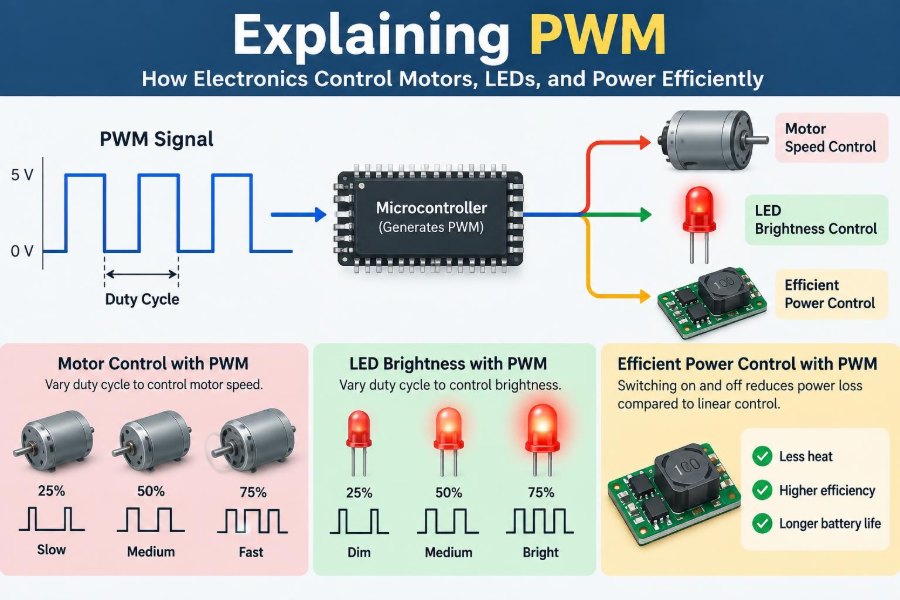
πŸ”Œ Explaining PWM: How Electronics Control Motors, LEDs, and Power Efficiently
Posted inFeatured

πŸ”Œ Explaining PWM: How Electronics Control Motors, LEDs, and Power Efficiently

Posted by admin November 5, 2026
PWM powers dimmers, motors, and compact converters by switching with precise timing. Learn duty cycle, frequency, flyback protection, noise, and real design trade-offs. πŸ’‘πŸ›žπŸ”§
Read More
πŸ”Œ Inside a Microcontroller: How Tiny Chips Read Sensors and Control Devices
Posted inFeatured

πŸ”Œ Inside a Microcontroller: How Tiny Chips Read Sensors and Control Devices

Posted by admin October 29, 2026
Follow the path from a sensor’s electrical signal to a motor, relay, or LEDβ€”and learn why timing, power, and driver circuits matter as much as code. βš™οΈπŸ§ πŸ”‹
Read More
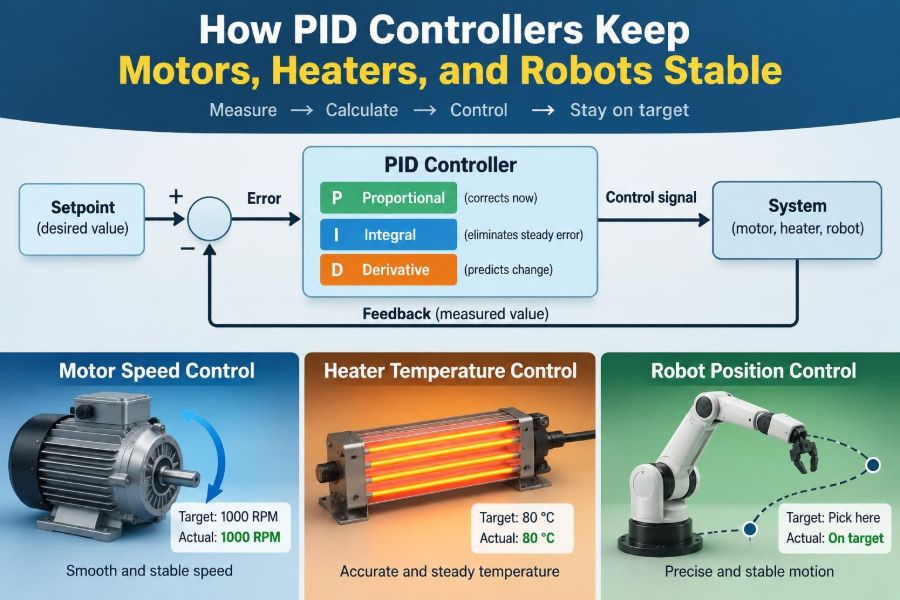
πŸ€– How PID Controllers Keep Motors, Heaters, and Robots Stable
Posted inFeatured

πŸ€– How PID Controllers Keep Motors, Heaters, and Robots Stable

Posted by admin September 16, 2026
See how proportional, integral, and derivative action turn noisy sensors and imperfect actuators into stable motors, accurate heaters, and smoother robots. βš™οΈπŸŒ‘οΈπŸ“ˆ
Read More
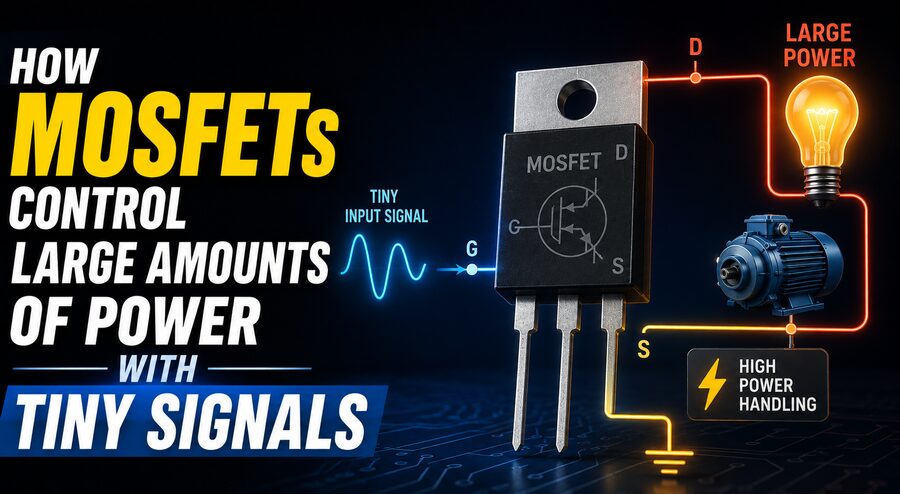
⚑ How MOSFETs Control Large Amounts of Power With Tiny Signals
Posted inFeatured

⚑ How MOSFETs Control Large Amounts of Power With Tiny Signals

Posted by admin August 27, 2026
Modern electronics often need to solve an interesting problem: how can a tiny control signal…
Read More
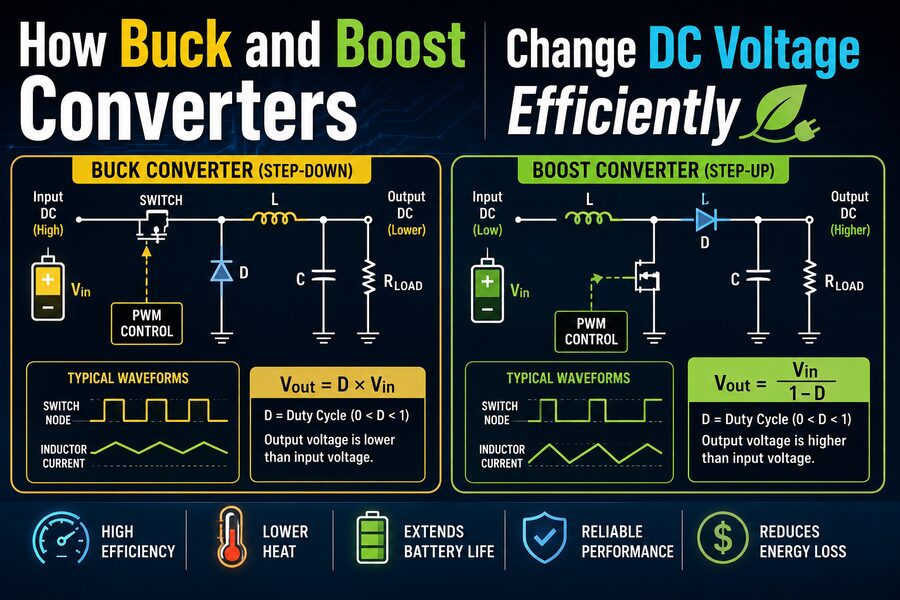
⚑ How Buck and Boost Converters Change DC Voltage Efficiently
Posted inFeatured

⚑ How Buck and Boost Converters Change DC Voltage Efficiently

Posted by admin August 25, 2026
Electronic devices rarely operate from a single convenient voltage. A battery may supply 12 volts,…
Read More
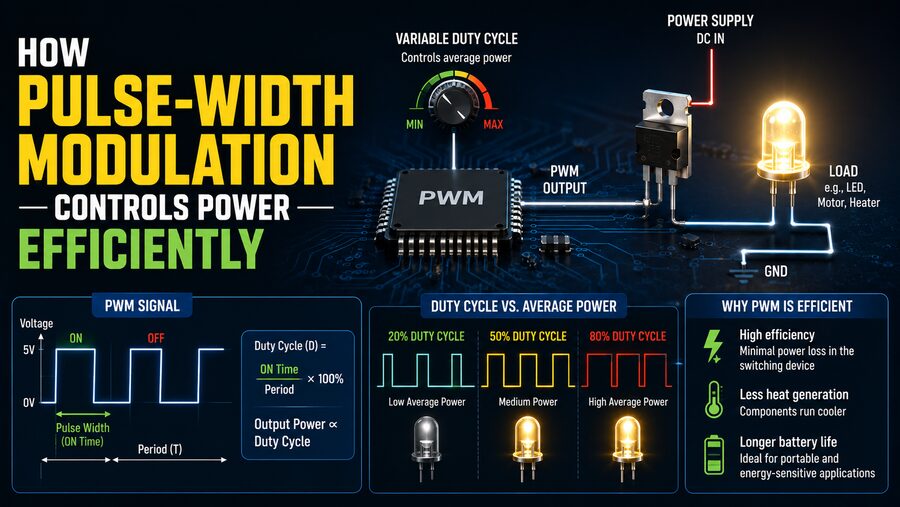
⚑ How Pulse-Width Modulation Controls Power Efficiently
Posted inFeatured

⚑ How Pulse-Width Modulation Controls Power Efficiently

Posted by admin August 24, 2026
Pulse-Width Modulation, commonly known as PWM, is one of the most widely used techniques for…
Read More

Recent Posts

  • πŸ”Œ How Long Do Capacitors, Batteries, and Power Components Last in Electronic Devices?
  • πŸ”Œ Dealing With Ground Loops: How to Eliminate Hum, Noise, and Unwanted Current Paths
  • πŸ”Œ How to Measure Frequency, Duty Cycle, and Signal Quality with an Oscilloscope
  • πŸ”Œ Understanding Transistors and How Tiny Semiconductor Switches Control Modern Electronics
  • πŸ”Œ The Solution to Signal Noise: How Filtering and Shielding Improve Electronic Reliability

Recent Comments

No comments to show.

Archives

  • November 2026
  • October 2026
  • September 2026
  • August 2026
  • March 2025
  • February 2025
  • January 2025
  • February 2022
  • November 2021
  • October 2021
  • September 2021
  • August 2021

Categories

  • basic
  • Circuit theory
  • consumer appliances
  • Control systems
  • Digtal time system and signal processing
  • DIY Project
  • Electric energy generation and utilization
  • electrical projects
  • electronic devices
  • Featured
  • Microprocessor and Microcontroller
  • multimedia processing
  • Numerical method
  • Power engineering
  • power transmission
  • Protection and Switch gear
  • Signal processing
  • Solid State drives
  • Systems and controls
  • Telecommunication
  • Wireless Technology
Copyright 2026 — Electronics Engineering. All rights reserved. Bloghash WordPress Theme
Scroll to Top