Skip to content
  • facebook.com
  • twitter.com
  • t.me
  • instagram.com
  • youtube.com
Electronics Engineering

Powering Innovation. Engineering the Connected World.

Subscribe
  • Home
  • Online Tools
  • Electronics Engineering App
  • Home
  • electronics engineering
  • Page 3
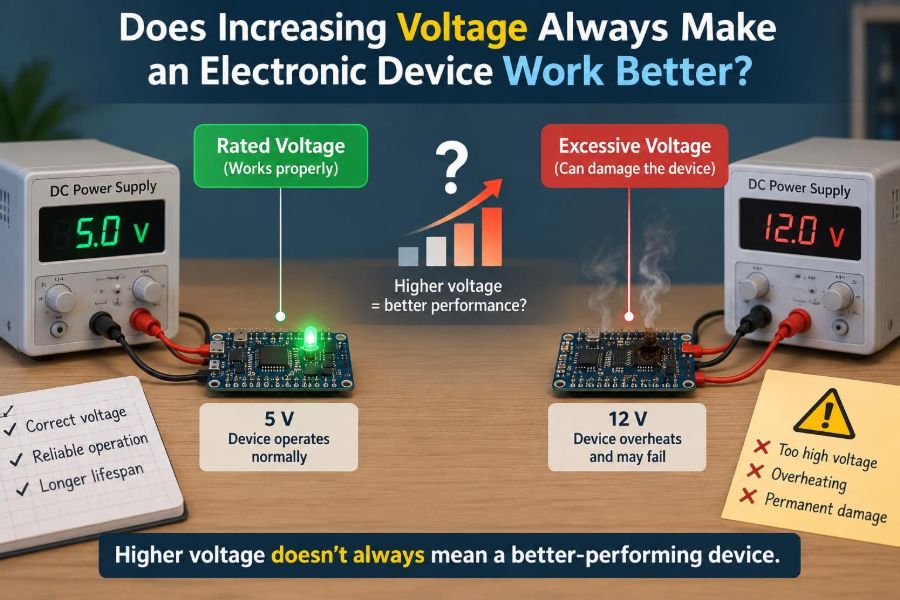
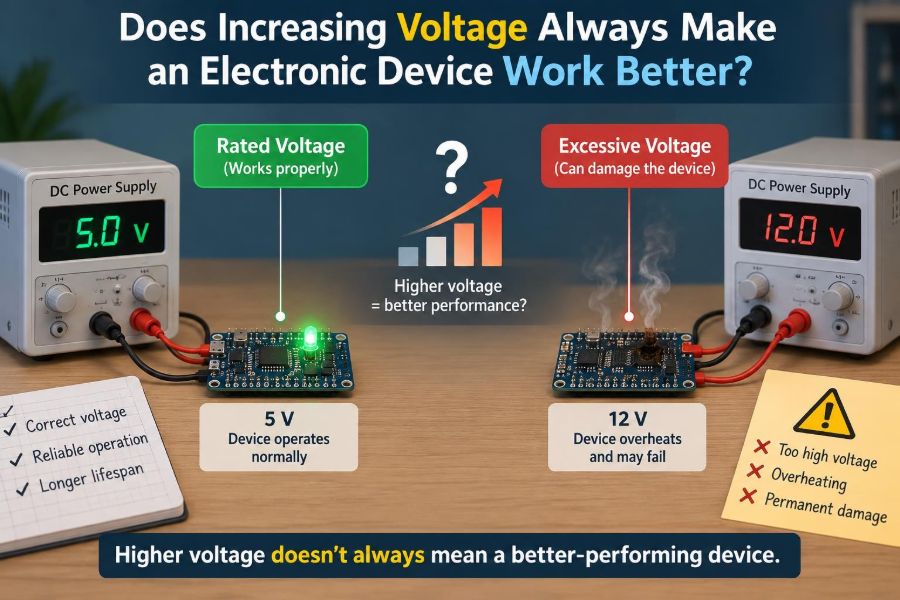
πŸ”Œ Does Increasing Voltage Always Make an Electronic Device Work Better?
Posted inFeatured

πŸ”Œ Does Increasing Voltage Always Make an Electronic Device Work Better?

Posted by admin October 8, 2026
A higher voltage can boost speed or powerβ€”but it can also overheat parts, destroy LEDs, and stress chips. Learn what to check before changing a supply. πŸ”ŒπŸ”₯🧰
Read More
πŸ”Œ Does Increasing Voltage Always Make an Electronic Device Work Better?
Posted inFeatured

πŸ”Œ Does Increasing Voltage Always Make an Electronic Device Work Better?

Posted by admin October 8, 2026
A higher voltage can boost speed or powerβ€”but it can also overheat parts, destroy LEDs, and stress chips. Learn what to check before changing a supply. πŸ”ŒπŸ”₯🧰
Read More
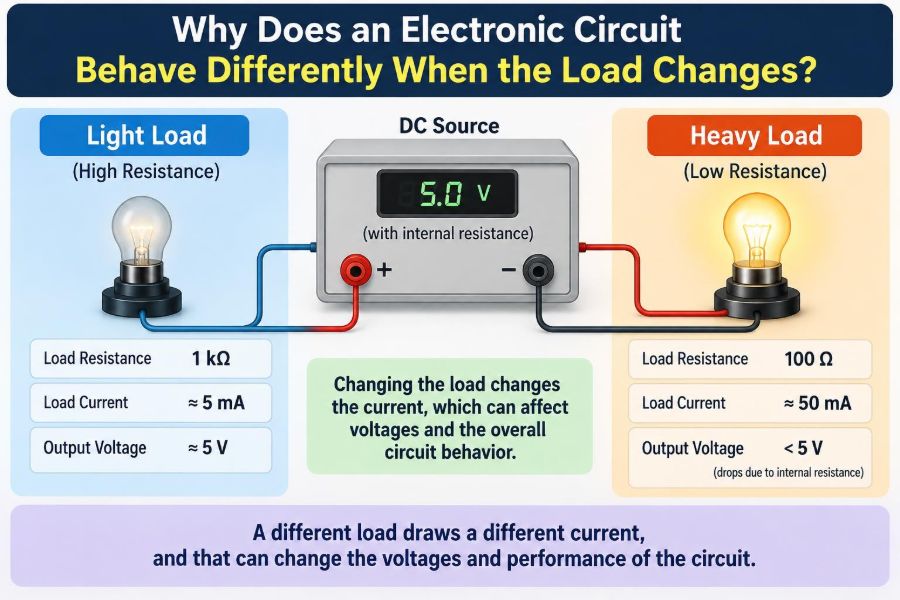
πŸ”Œ Why Does an Electronic Circuit Behave Differently When the Load Changes?
Posted inFeatured

πŸ”Œ Why Does an Electronic Circuit Behave Differently When the Load Changes?

Posted by admin October 8, 2026
A circuit is more than its power-supply label. See how loads, wiring, inrush current, regulation, and heat reshape real-world voltage and current behavior. βš‘πŸ“πŸ”‹
Read More
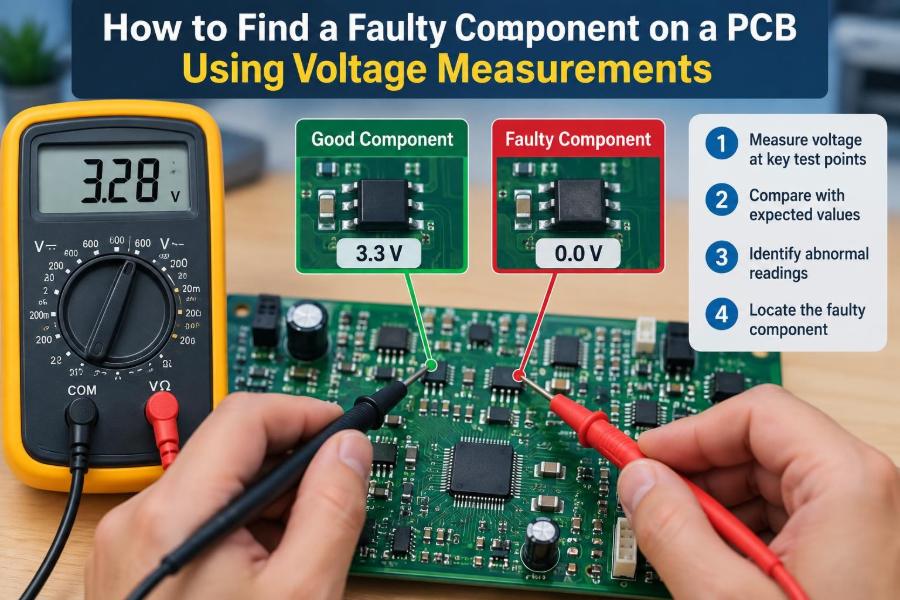
πŸ”Œ How to Find a Faulty Component on a PCB Using Voltage Measurements
Posted inFeatured

πŸ”Œ How to Find a Faulty Component on a PCB Using Voltage Measurements

Posted by admin October 7, 2026
A dead board often leaves clues along its power path. Learn how to trace rails, test regulators, separate shorts from opens, and avoid risky multimeter mistakes. πŸ§ͺβš‘πŸ› οΈ
Read More
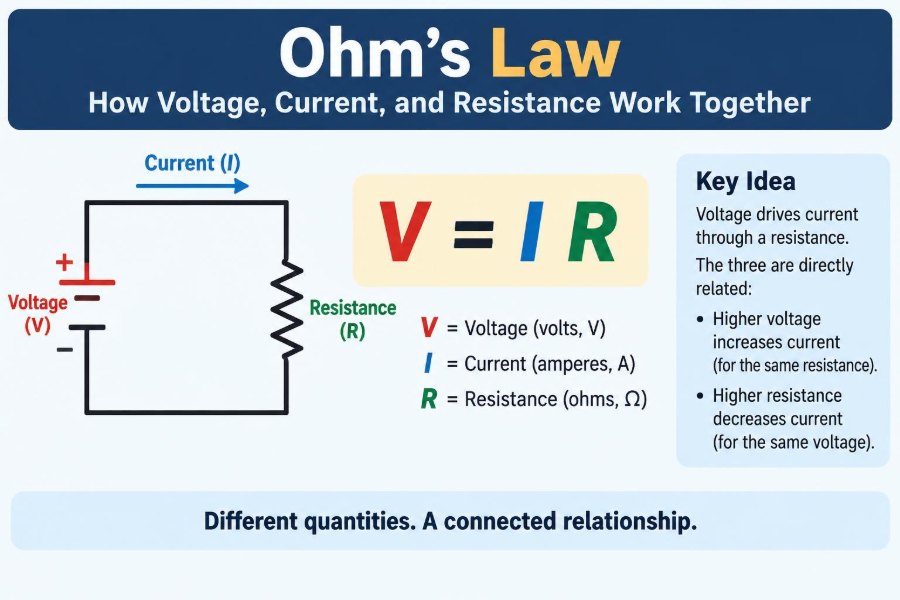
πŸ”Œ The Formula Behind Ohm’s Law: How Voltage, Current, and Resistance Work Together
Posted inFeatured

πŸ”Œ The Formula Behind Ohm’s Law: How Voltage, Current, and Resistance Work Together

Posted by admin October 6, 2026
Voltage, current, and resistance are more than three letters. Learn how Ohm’s law predicts circuit behavior, prevents mistakes, and guides safe measurements. πŸ”ŒπŸ“πŸ”§
Read More
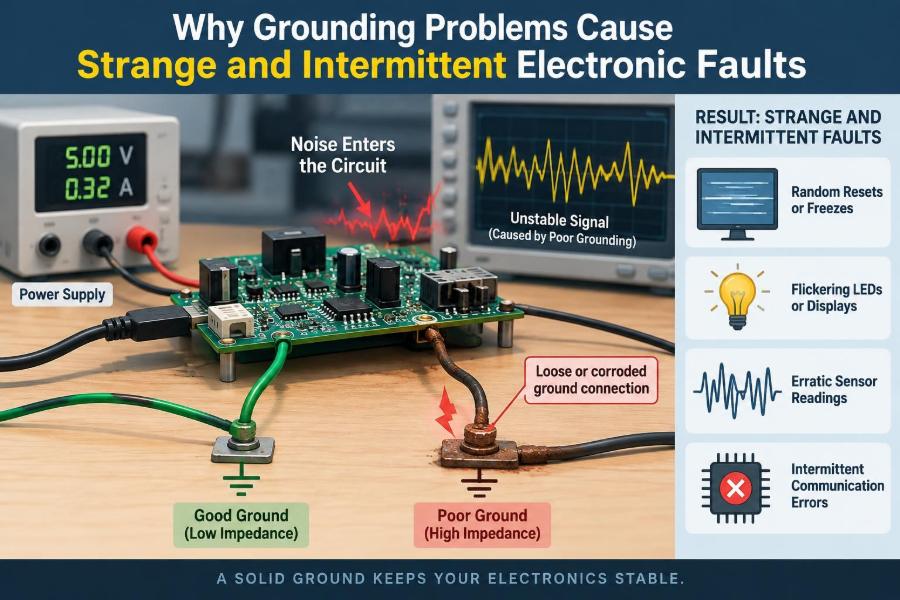
πŸ”Œ Why Grounding Problems Cause Strange and Intermittent Electronic Faults
Posted inFeatured

πŸ”Œ Why Grounding Problems Cause Strange and Intermittent Electronic Faults

Posted by admin October 5, 2026
Resets, hum, drifting sensors, and corrupted data often share one hidden cause: return-current paths. Learn what ground really does and how to diagnose it safely. βš‘πŸ”πŸ› οΈ
Read More
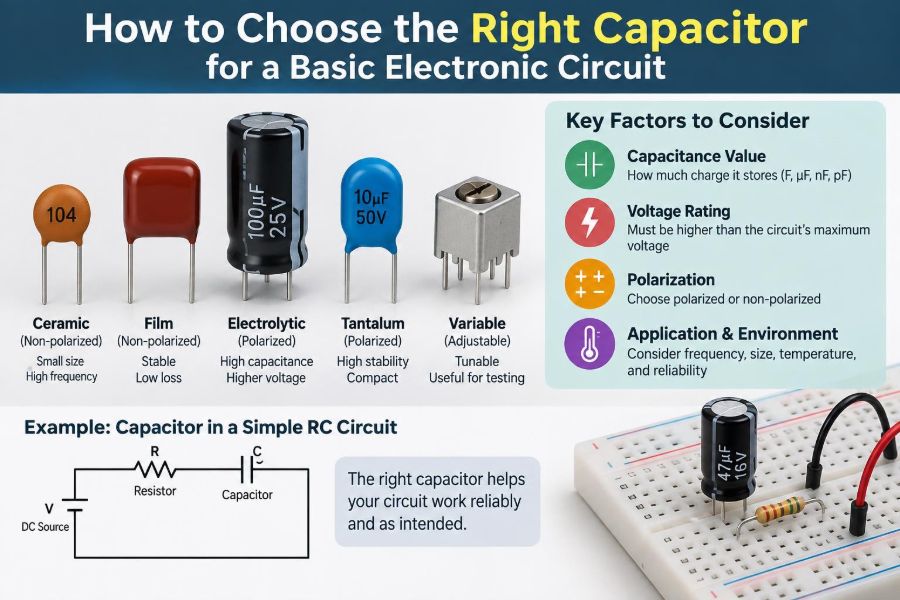
πŸ”Œ How to Choose the Right Capacitor for a Basic Electronic Circuit
Posted inFeatured

πŸ”Œ How to Choose the Right Capacitor for a Basic Electronic Circuit

Posted by admin October 5, 2026
A capacitor’s value is only the start. Learn how voltage rating, ESR, dielectric, placement, and DC bias shape real circuit performance. βš‘πŸ§°πŸ”
Read More
πŸ”Œ Can Technology Make Electronic Devices Much More Energy-Efficient?
Posted inFeatured

πŸ”Œ Can Technology Make Electronic Devices Much More Energy-Efficient?

Posted by admin October 4, 2026
From transistor switching to displays, chargers, radios, and software wake-ups, discover the design choices that make electronics use less energy without sacrificing useful performance. βš‘πŸ”‹πŸ§ 
Read More
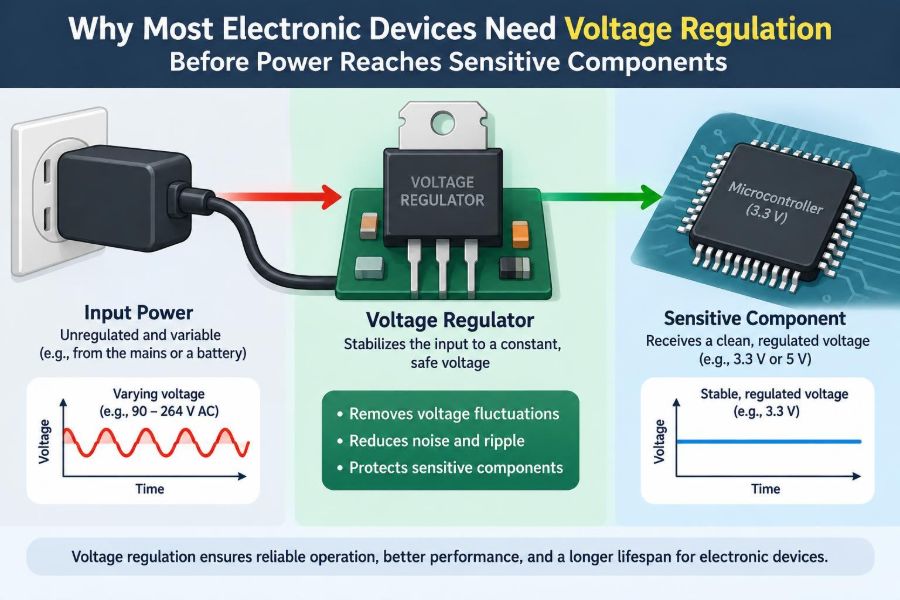
πŸ”Œ Why Most Electronic Devices Need Voltage Regulation Before Power Reaches Sensitive Components
Posted inFeatured

πŸ”Œ Why Most Electronic Devices Need Voltage Regulation Before Power Reaches Sensitive Components

Posted by admin October 4, 2026
A battery, USB port, or adapter rarely delivers a perfectly usable rail by itself. See how regulators, capacitors, layout, and protection keep circuits stable. πŸ§ πŸ”‹πŸ› οΈ
Read More
πŸ”Œ Does a Higher-Wattage Power Supply Make Electronic Devices Perform Better?
Posted inFeatured

πŸ”Œ Does a Higher-Wattage Power Supply Make Electronic Devices Perform Better?

Posted by admin October 3, 2026
A larger power supply is not always a performance upgrade. Learn how watts, volts, current, USB-C negotiation, cables, and PSU quality determine what your device can safely use. βš‘πŸ’»πŸ”‹
Read More

Posts pagination

Previous page 1 2 3 4 5 … 7 Next page

Recent Posts

  • πŸ”Œ How Far Can a Wireless Signal Travel Before Interference and Power Loss Take Over?
  • πŸ”Œ How to Make a Simple Voltage Regulator Circuit for Stable DC Power
  • πŸ”Œ Overcoming Electrical Noise in Sensitive Electronic Circuits
  • πŸ”Œ Expectation vs Reality: Do Higher-Spec Components Always Build a Better Circuit?
  • πŸ”Œ How Manufacturers Produce Printed Circuit Boards with Thousands of Tiny Components

Recent Comments

No comments to show.

Archives

  • October 2026
  • September 2026
  • August 2026
  • March 2025
  • February 2025
  • January 2025
  • February 2022
  • November 2021
  • October 2021
  • September 2021
  • August 2021

Categories

  • basic
  • Circuit theory
  • consumer appliances
  • Control systems
  • Digtal time system and signal processing
  • DIY Project
  • Electric energy generation and utilization
  • electrical projects
  • electronic devices
  • Featured
  • Microprocessor and Microcontroller
  • multimedia processing
  • Numerical method
  • Power engineering
  • power transmission
  • Protection and Switch gear
  • Signal processing
  • Solid State drives
  • Systems and controls
  • Telecommunication
  • Wireless Technology
Copyright 2026 — Electronics Engineering. All rights reserved. Bloghash WordPress Theme
Scroll to Top