Skip to content
  • facebook.com
  • twitter.com
  • t.me
  • instagram.com
  • youtube.com
Electronics Engineering

Powering Innovation. Engineering the Connected World.

Subscribe
  • Home
  • Online Tools
  • Electronics Engineering App
  • Home
  • power supplies
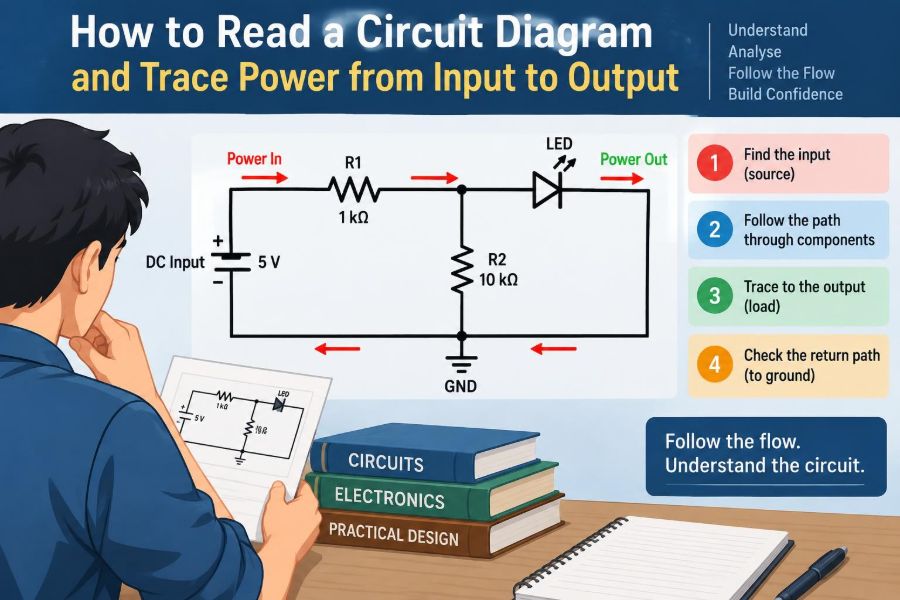
πŸ”Œ How to Read a Circuit Diagram and Trace Power from Input to Output
Posted inFeatured

πŸ”Œ How to Read a Circuit Diagram and Trace Power from Input to Output

Posted by admin October 23, 2026
Turn dense circuit diagrams into a clear power storyβ€”from the input connector through protection, regulators, enables, and loads. Learn where to measure safely. βš‘πŸ”πŸ› οΈ
Read More
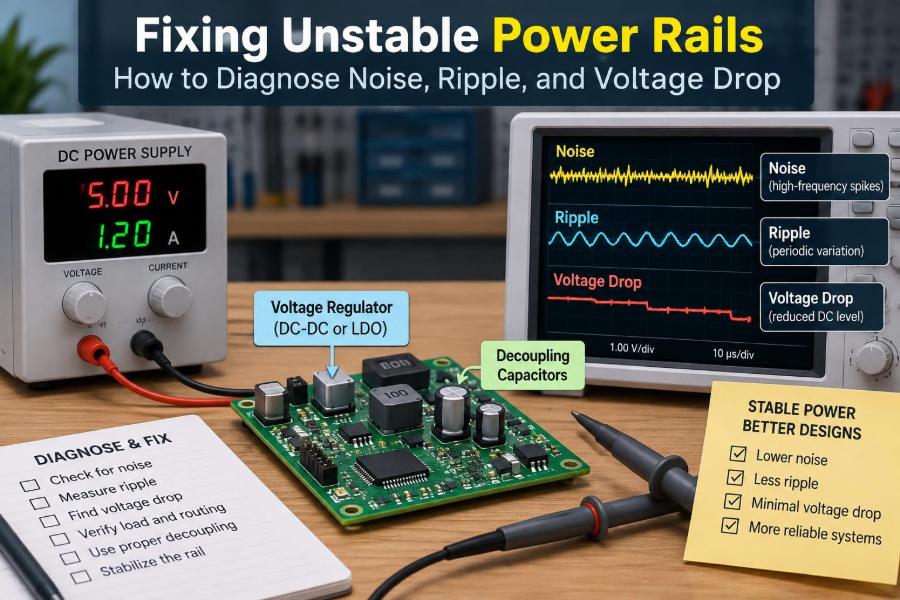
πŸ”Œ Fixing Unstable Power Rails: How to Diagnose Noise, Ripple, and Voltage Drop
Posted inFeatured

πŸ”Œ Fixing Unstable Power Rails: How to Diagnose Noise, Ripple, and Voltage Drop

Posted by admin October 15, 2026
Track down voltage sag, converter ripple, ground bounce, and fast spikes with a practical measurement workflow. Learn where to probe and which fixes truly fit the fault. πŸ“ˆπŸ§ͺπŸ› οΈ
Read More
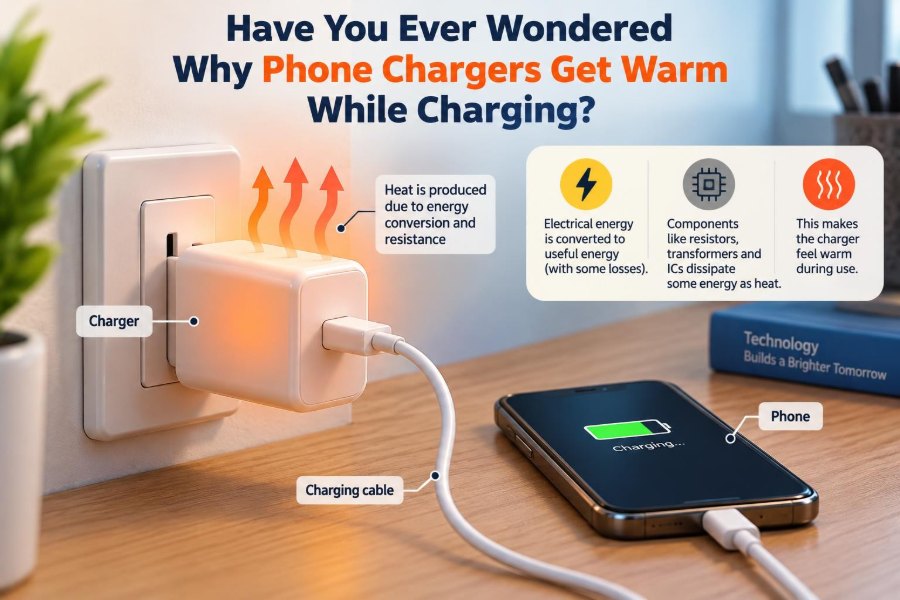
πŸ”Œ Have You Ever Wondered Why Phone Chargers Get Warm While Charging?
Posted inFeatured

πŸ”Œ Have You Ever Wondered Why Phone Chargers Get Warm While Charging?

Posted by admin October 9, 2026
A warm charging brick is often normalβ€”but hot plugs, bad cables, and trapped heat are not. Learn what causes charger heat and when to unplug safely. πŸ”‹βš‘πŸ›‘οΈ
Read More
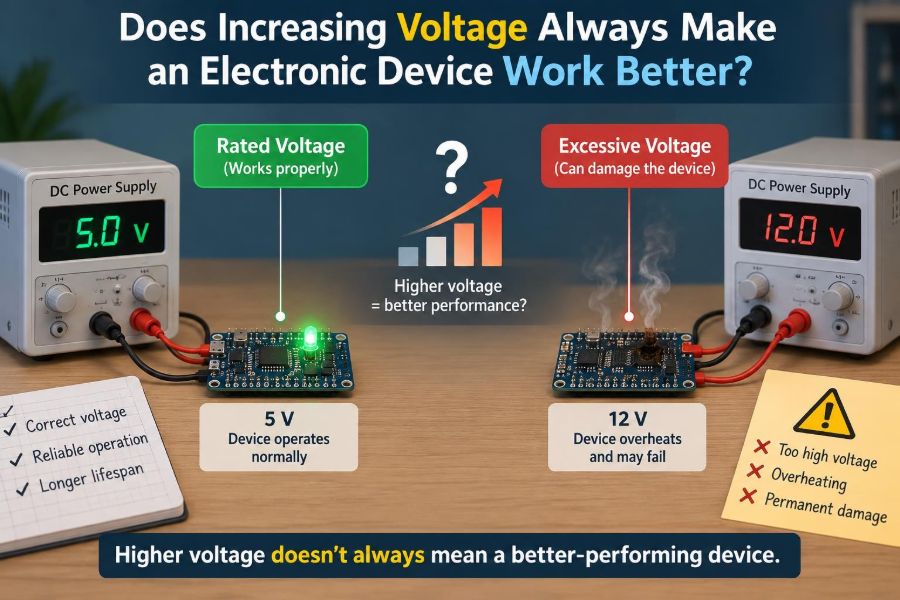
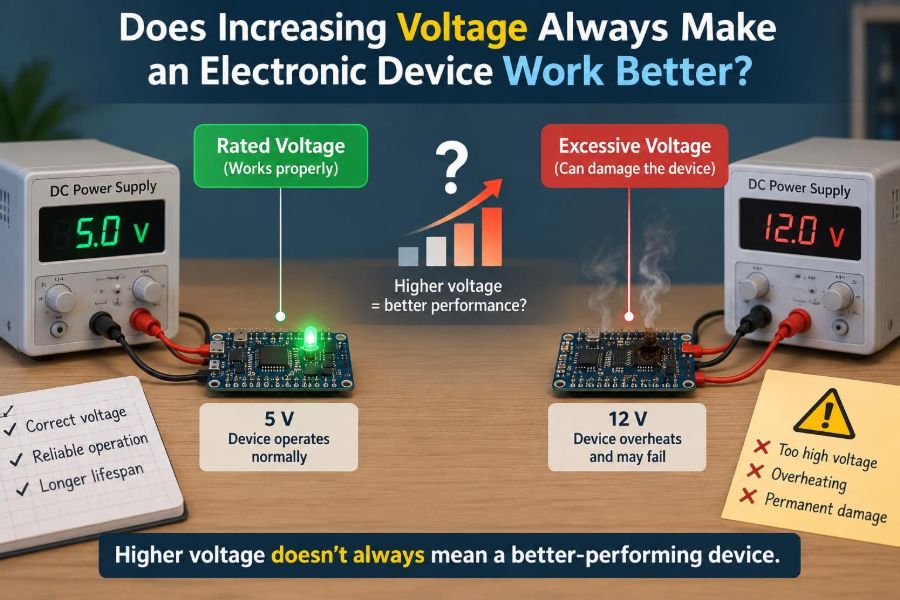
πŸ”Œ Does Increasing Voltage Always Make an Electronic Device Work Better?
Posted inFeatured

πŸ”Œ Does Increasing Voltage Always Make an Electronic Device Work Better?

Posted by admin October 8, 2026
A higher voltage can boost speed or powerβ€”but it can also overheat parts, destroy LEDs, and stress chips. Learn what to check before changing a supply. πŸ”ŒπŸ”₯🧰
Read More
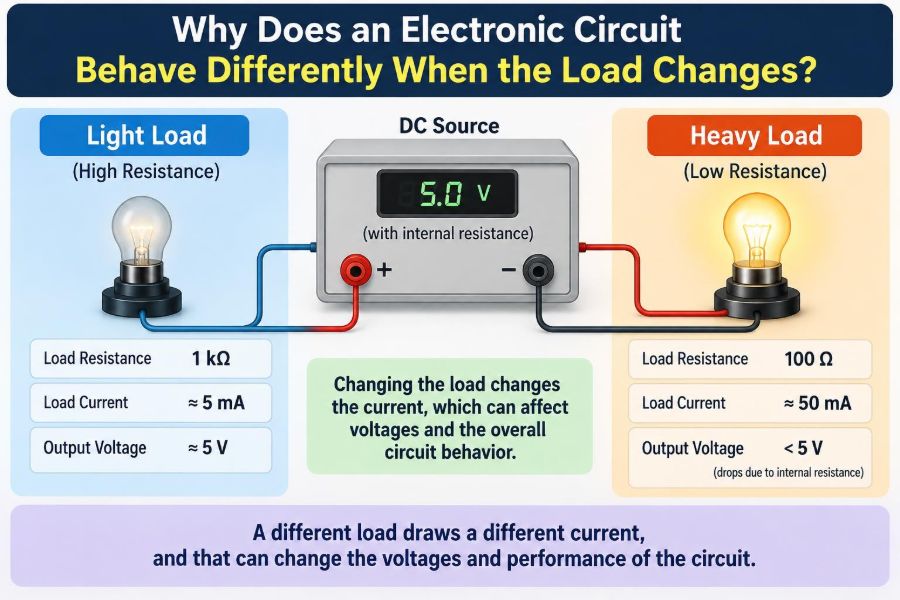
πŸ”Œ Why Does an Electronic Circuit Behave Differently When the Load Changes?
Posted inFeatured

πŸ”Œ Why Does an Electronic Circuit Behave Differently When the Load Changes?

Posted by admin October 8, 2026
A circuit is more than its power-supply label. See how loads, wiring, inrush current, regulation, and heat reshape real-world voltage and current behavior. βš‘πŸ“πŸ”‹
Read More
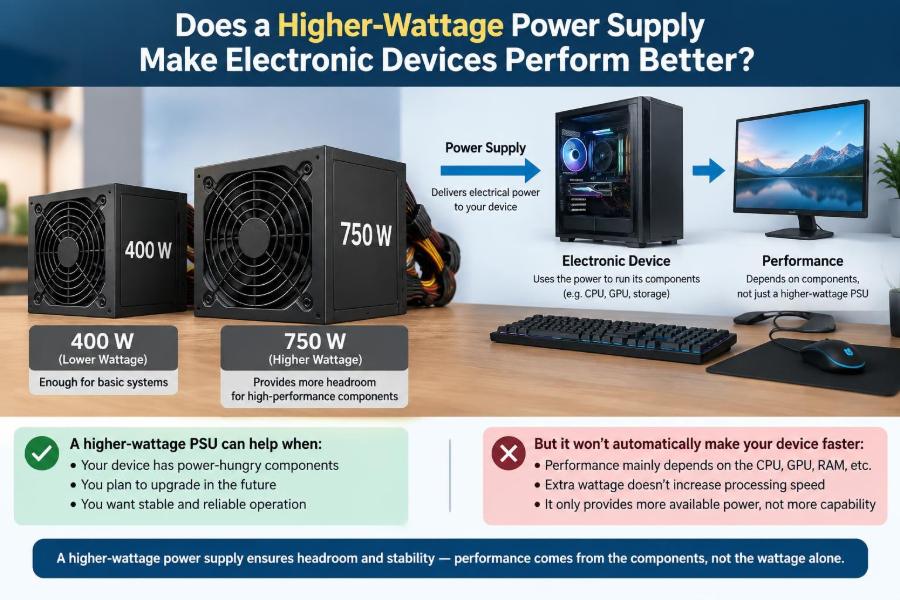
πŸ”Œ Does a Higher-Wattage Power Supply Make Electronic Devices Perform Better?
Posted inFeatured

πŸ”Œ Does a Higher-Wattage Power Supply Make Electronic Devices Perform Better?

Posted by admin October 3, 2026
A larger power supply is not always a performance upgrade. Learn how watts, volts, current, USB-C negotiation, cables, and PSU quality determine what your device can safely use. βš‘πŸ’»πŸ”‹
Read More
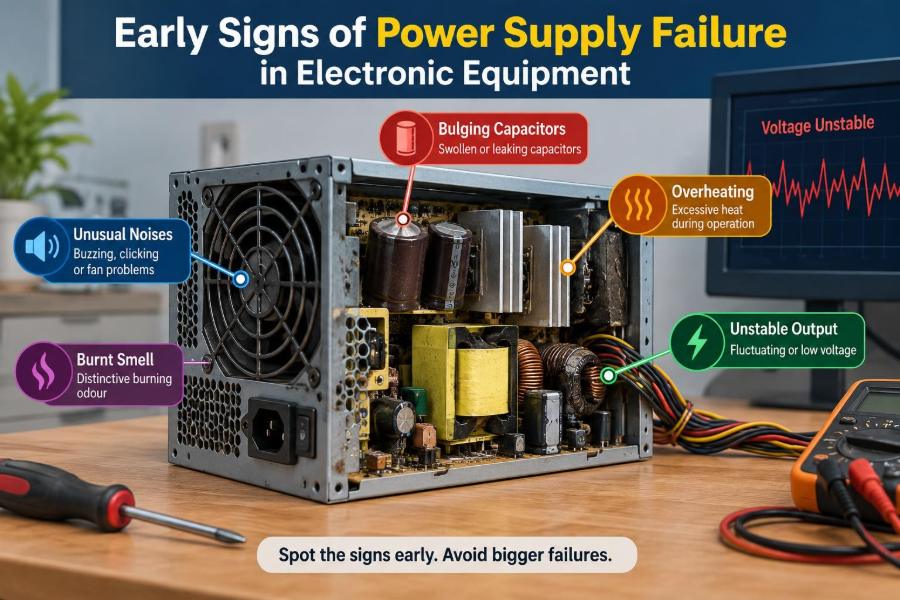
πŸ”Œ Early Signs of Power Supply Failure in Electronic Equipment
Posted inFeatured

πŸ”Œ Early Signs of Power Supply Failure in Electronic Equipment

Posted by admin October 1, 2026
Random resets, flickering screens, heat, and strange sounds can point to weak power delivery. Learn what each clue means and how to test safely before damage spreads. πŸ› οΈπŸ“‰βš οΈ
Read More
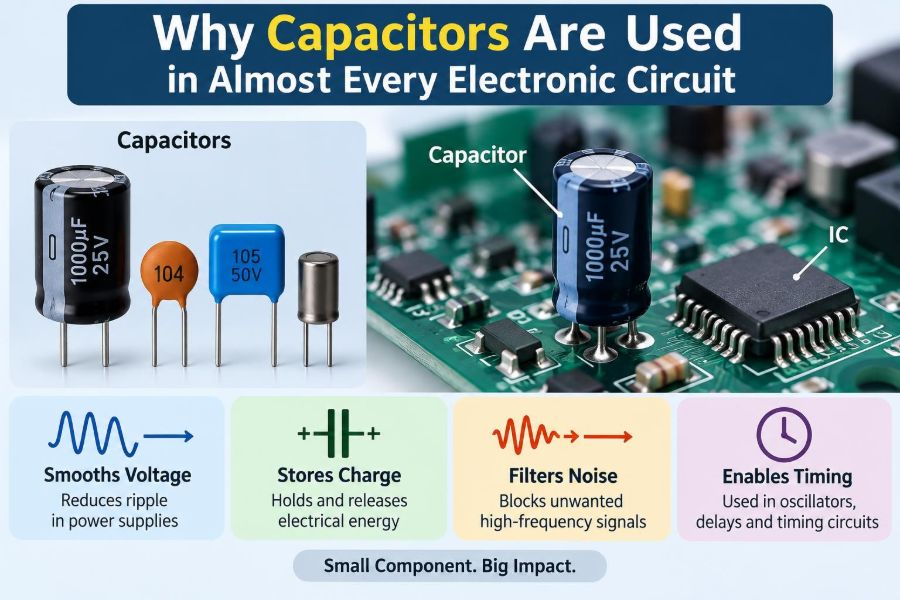
πŸ”Œ Why Capacitors Are Used in Almost Every Electronic Circuit
Posted inFeatured

πŸ”Œ Why Capacitors Are Used in Almost Every Electronic Circuit

Posted by admin September 23, 2026
From stabilizing IC power rails to filtering noise and shaping audio, capacitors do far more than store charge. Discover what each one is really doing on a circuit board. πŸ§ πŸ”§βš‘
Read More
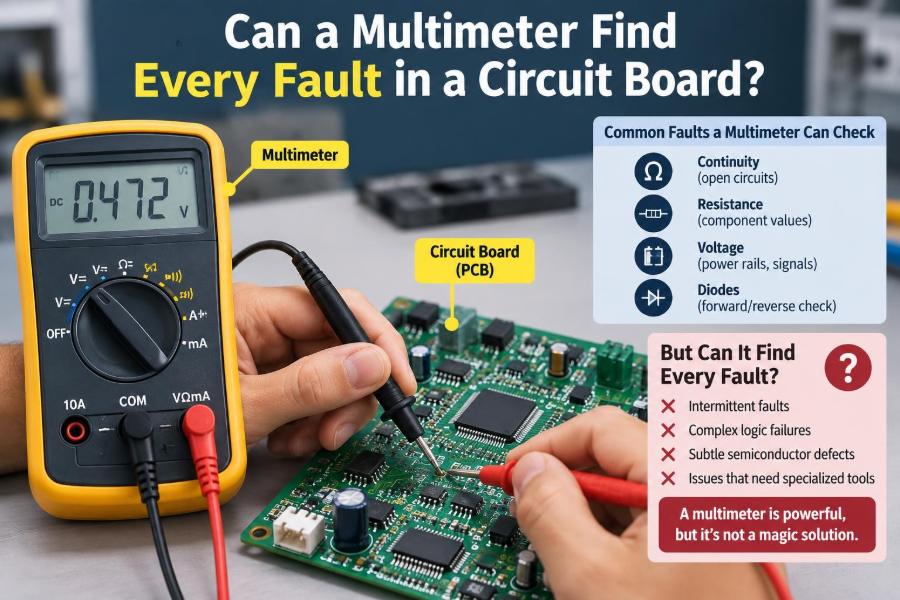
πŸ”Œ Can a Multimeter Find Every Fault in a Circuit Board?
Posted inFeatured

πŸ”Œ Can a Multimeter Find Every Fault in a Circuit Board?

Posted by admin September 18, 2026
A multimeter is essential, but it cannot see every short, ripple, timing error, or intermittent fault. Learn what it proves, what it misses, and when to switch tools. πŸ› οΈπŸ“ˆπŸ”
Read More

Recent Posts

  • πŸ”Œ Inside a Microcontroller: How Tiny Chips Read Sensors and Control Devices
  • πŸ”Œ How It’s Built: From Circuit Design to a Finished Printed Circuit Board
  • πŸ”Œ Which Approach Fits the Circuit: Linear Regulator, Buck Converter, or LDO?
  • πŸ”Œ Why Modern Electronics Use Switching Regulators Instead of Linear Power Supplies
  • πŸ”Œ A Smarter Way to Troubleshoot Circuit Faults Using Voltage and Signal Measurements

Recent Comments

No comments to show.

Archives

  • October 2026
  • September 2026
  • August 2026
  • March 2025
  • February 2025
  • January 2025
  • February 2022
  • November 2021
  • October 2021
  • September 2021
  • August 2021

Categories

  • basic
  • Circuit theory
  • consumer appliances
  • Control systems
  • Digtal time system and signal processing
  • DIY Project
  • Electric energy generation and utilization
  • electrical projects
  • electronic devices
  • Featured
  • Microprocessor and Microcontroller
  • multimedia processing
  • Numerical method
  • Power engineering
  • power transmission
  • Protection and Switch gear
  • Signal processing
  • Solid State drives
  • Systems and controls
  • Telecommunication
  • Wireless Technology
Copyright 2026 — Electronics Engineering. All rights reserved. Bloghash WordPress Theme
Scroll to Top